Disclosure: As an Amazon Associate, I earn from qualifying purchases. Learn more
Last Updated on October 27, 2026 by Rhyes Frank
If you want the best combi boiler for your home, start with two numbers: the heating load your house actually needs and the hot water flow you expect at peak. A combi boiler delivers both from one compact unit, so a wrong size shows up twice, as cold radiators or lukewarm showers.
Among the units covered here, the two Rinnai models lead the short list, one for modest heat loads and one for larger loads, while the Noritz units pair a built-in pump with direct venting. Before you compare brands, check three things: heating capacity against your heat loss, hot water capacity against your flow rate, and venting and gas supply limits.
This guide gives you the rules of thumb, the limits, and a short list so you stay in control of cost, efficiency, and upkeep.
Rinnai IP060160C and Rinnai IP150199C pair 96 percent AFUE with heating and hot water from one unit, the smaller for modest heat loads and the larger for bigger homes.
Our Choice

Rinnai IP060160C Combi Boiler
- 96 percent AFUE rating
- 160K BTU hot water rating
- 60K BTU heating rating
Top Pick
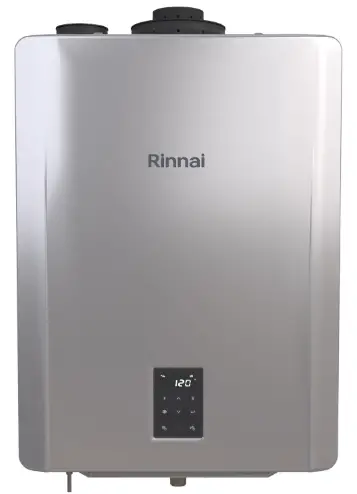
Rinnai IP150199C Combi Boiler
- 150K BTU heating rating
- 199K BTU hot water rating
- Setup wizard advanced controls
Rinnai IP060160C Combi Boiler For Moderate Heat Loads
The Rinnai IP060160C I-Series Plus is a condensing combi boiler that pairs a 60K BTU space heating rating with a 160K BTU domestic hot water rating, delivering hot water and space heating at the same time. It lists a 96 percent AFUE rating and runs on natural gas or propane.
Smart Connect adds Wi-Fi and Bluetooth through the Rinnai Central App, Smart Sense gas valve technology helps manage energy use, and a front panel display with a quick setup screen simplifies commissioning. Four-zone capability and 2-inch venting up to 75 feet widen the layout options. It is one of the best combi boiler options to shortlist for moderate heat loads with high hot water demand.
Owner Impressions
Feedback commonly mentions simple setup, quiet running, and efficient operation, which fits the listing’s quick setup screen and condensing design.
Standout Feature
Smart Connect Wi-Fi and Bluetooth control with a quick setup screen.
Main Advantages
- 96 percent AFUE rating
- Natural gas or propane operation
- Four-zone heating capability
- Common venting for up to eight units
Works Well With
- Natural gas or propane supplies
- Multi-zone hydronic heating layouts
- Common-vented multi-unit installations
Install Note
Confirm gas type, venting, and heat loss first. Cabinet is 18.5 inches wide and 26.4 inches tall. Register within 90 days to keep the labor warranty.
High Capacity Combi Boiler Pick With Rinnai IP150199C
The Rinnai IP150199C steps up to 150K BTU for space heating and 199K BTU for domestic hot water on the same I-Series Plus platform. It lists 96 percent AFUE, natural gas or propane operation, and simultaneous heating and hot water delivery.
Smart Sense Gas Adaptive Technology, advanced controls with a setup wizard, and Smart Connect Wi-Fi and Bluetooth control are listed alongside four-zone capability. Common venting supports up to eight units, which suits multi-family and commercial layouts. It is one of the best combination boiler choices here for larger loads.
Owner Impressions
Some feedback points to support access depending on a licensed installer, so plan your service route before installation.
Standout Feature
Smart Sense Gas Adaptive Technology with a setup wizard.
Main Advantages
- 150K BTU heating and 199K BTU hot water
- Advanced controls with setup wizard
- 2-inch venting up to 75 feet
- Smart Sense gas adaptive technology
Works Well With
- Natural gas or propane supplies
- Rinnai Central App for smart home control
- Larger heating loads up to 150K BTU
Install Note
Have a licensed installer confirm vent length, gas supply, and zone layout. Register within 90 days to keep the five-year labor coverage.
Noritz NRCB199DV-NG Direct Vent Combination Boiler
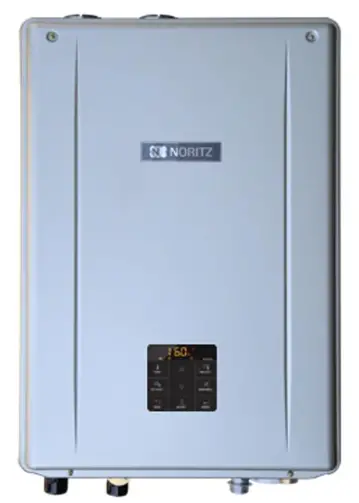
The Noritz NRCB199DV-NG is an indoor direct vent combination boiler with a built-in pump, rated at 199,900 BTU for domestic hot water at up to 11.1 GPM and 120,000 BTU for space heating. It delivers hot water and heating at the same time and runs on natural gas.
The listing highlights superior temperature stability for domestic hot water, a clean burner, and a new wall bracket for easier mounting. The venting is described as standard vent convertible. It is one of the best combi boiler fits for homes where hot water demand is the larger load.
Owner Impressions
Owners often mention easy installation and steady hot water, and some note pumps and ticking sounds during operation.
Standout Feature
Simultaneous domestic hot water and heating with a new wall bracket.
Main Advantages
- 11.1 GPM maximum hot water flow
- Hot water and heating together
- Stable domestic hot water temperature
- Built-in pump included
Works Well With
- Natural gas systems
- Direct vent installations
- Homes with high hot water demand
Install Note
Confirm vent setup and gas supply, and use a qualified installer. Performance depends on correct setup and maintenance.
Built-In Pump Combi Boiler From Noritz NRCB180DV-NG

The Noritz NRCB180DV-NG is an indoor direct vent combination boiler with a built-in pump, rated at 180,000 BTU for domestic hot water at up to 9.8 GPM and 100,000 BTU for space heating. It supplies heating and hot water together and runs on natural gas.
Superior hot water temperature stability, a clean burner, and a new wall bracket round out the listing details. The venting is described as standard vent convertible. It is a strong fit for homes with a moderate heating load and steady hot water needs.
Owner Impressions
Impressions center on the built-in pump, stable hot water temperature, and wall-bracket mounting described in the listing.
Standout Feature
Built-in pump for the combination boiler.
Main Advantages
- 9.8 GPM maximum hot water flow
- Built-in pump included
- Clean burner design
- New wall bracket for mounting
Works Well With
- Natural gas systems
- Direct vent installations
- Moderate heating loads near 100K BTU
Install Note
Check that the natural gas supply and vent configuration match the unit. Use a professional installer and follow the manual.
Quick Rules For Picking The Best Combi Boiler
Use these rules before you compare any model sheet. Each one takes a few minutes and filters out most poor matches.
- Heating load first: Get a heat loss number for the house, then pick a unit whose space heating rating covers it without a large excess.
- Hot water flow second: List the fixtures that run together and size the hot water rating to that peak flow.
- Two ratings, two checks: A combi lists heating and hot water capacity separately, so compare each against its own load.
- Fuel type: Match natural gas or propane to your supply before anything else.
- Vent path: Confirm vent length, diameter, and termination fit your layout.
- Controls: Zoning and app control matter more than extra features you will never use.
- Serviceability: Pick a unit your local technician can service and supply parts for.
Sizing A Combi Boiler Without Guessing
Oversizing wastes fuel and adds wear, while undersizing leaves rooms cold. Size the two loads separately, then check both against the unit’s ratings.
- Step 1, run a heat loss calculation: A room-by-room calculation gives the peak space heating load. Do not size from square footage or from the old boiler’s label alone.
- Step 2, find your peak hot water flow: Add the flow of fixtures that may run together, such as a shower and a kitchen tap, in gallons per minute.
- Step 3, measure the temperature rise: Subtract your incoming water temperature from your target temperature, in degrees Fahrenheit. Winter water is colder, so use the coldest month.
- Step 4, apply the rule of thumb: Output in BTU per hour is roughly flow in gallons per minute times 500 times the temperature rise. Divide by the unit’s efficiency to get the input rating you need.
- Step 5, compare against each rating: An example of 4 gallons per minute with a 70 degree rise needs about 140,000 BTU per hour of output, or close to 155,000 BTU of input at 90 percent efficiency. Check that figure against the hot water rating and the listed maximum flow, such as 11.1 GPM for the Noritz NRCB199DV-NG, then check your heat loss against the heating rating.
A modulating burner helps a unit with some headroom run efficiently at lower loads. If your two numbers land far apart, let the larger load decide the model and verify the smaller one still fits.
How A Combination Boiler Works And Where It Falls Short
On-Demand Operation
A combination boiler heats water directly when a hot tap opens, and it circulates heated water through radiators or baseboard loops for space heating. A flow sensor detects the tap, the burner fires, and a heat exchanger transfers the heat. For a refresher on the parts, see how a combi works.
Condensing models add a secondary heat exchanger that pulls extra heat from exhaust gases, which is where much of their efficiency comes from.
Strengths
One compact unit replaces a separate boiler and storage tank, which frees floor space. There is no stored hot water to keep warm, so standby losses stay low. Both Rinnai units and both Noritz units list simultaneous heating and hot water.
Trade-Offs
Hot water and heating share one burner, so heavy use of both at once can strain a tightly sized unit. Output also depends on incoming water pressure and temperature. Hard water and tight venting runs add upkeep and layout limits.
Heating Setups Where A Combi Boiler Works Well
Match the unit to the distribution system you already have, not the one you might add later.
- Radiator and baseboard loops: The standard match for hydronic heating at typical supply temperatures.
- Multi-zone layouts: Both Rinnai models list four-zone capability, which lets you split heating areas.
- Low-temperature floor loops: Check the manufacturer’s supply temperature limits and whether a mixing device is needed.
- Smart controls: Wi-Fi and app control, such as Rinnai’s Smart Connect, help you monitor and adjust schedules.
- Multi-unit venting: Rinnai lists common venting for up to eight units, which fits multi-family and commercial layouts.
Is A Combi Boiler Wrong For Your Home?
Treat each item below as a red flag. One flag means ask more questions, and several flags mean look at a separate boiler with an indirect tank.
- Many fixtures run together: Several showers at once can exceed the hot water rating, so check peak flow first.
- Weak incoming water pressure or flow: A combi depends on the home’s water supply for hot water delivery, and low flow limits output.
- Hard water with no treatment plan: Scale builds on the heat exchanger and cuts heat transfer.
- No clear vent or condensate route: Long runs, tight walls, or no drain nearby raise installation complexity.
- Heat loss far above the heating rating: A unit that covers hot water but not the house leaves rooms cold in winter.
- Gas supply that cannot meet the load: The gas line and meter must handle the unit’s full input.
A single red flag is not a veto, but every flag you can name before purchase is simpler to solve than after installation.
Efficiency Ratings To Check Before Choosing A Combi Boiler
AFUE shows how much fuel energy becomes heat for the house over a season. New boilers must display it, so you can compare models directly.
- AFUE: Condensing boilers typically reach 90 to 96 percent AFUE, while older natural-draft designs often fall below 80 percent. Both Rinnai listings state 96 percent.
- Energy Star label: Look for it when comparing efficiency, and confirm it on the exact model.
- Modulating burner: It matches output to demand instead of cycling on and off, which supports efficiency.
- Return water temperature: Lower return temperatures encourage condensing, so reset curves and flow settings matter as much as the label.
- Sealed combustion: The unit draws combustion air from outside instead of heated room air.
AFUE is a seasonal rating, so real results still depend on your system temperatures and settings.
Venting, Gas Supply, And Install Checks For A Combi Boiler
A licensed installer does the work, but you control the checklist. Ask for each item below in writing before the job starts.
- Vent length and diameter: Compare the planned run with the manufacturer limit, such as the 2-inch vent up to 75 feet listed for both Rinnai models.
- Sealed combustion preferred: Sealed-combustion units use outside air, which avoids wasting heated indoor air. Both Noritz units are listed as direct vent.
- Condensate handling: Condensing units produce acidic condensate, so plan a proper drain path and approved materials.
- Gas type and line size: Confirm natural gas or propane and that the line can carry the full input.
- Clearances and ventilation: Follow the manual for wall space, service access, and air supply.
- Code and permits: Installation follows local codes and the National Fuel Gas Code, and a permit or inspection may be required.
- Carbon monoxide alarms: Place working alarms near sleeping areas and the boiler room.
Common mistakes include wrong pipe sizing, poor placement, and skipped pressure checks, which lead to unstable heat and early failures. An installer who sizes from your heat loss report avoids most of them.
Common Combi Boiler Problems And Likely Causes
Most faults trace back to a few causes. Match the symptom first, then check the cause before you call for service.
- Low pressure: Usually a small leak, trapped air, or a relief valve that has been discharging. If you see no drips, read about pressure loss without a leak.
- High pressure: Often an overfilled system or a failing expansion vessel. See high pressure and leaking for next steps.
- No hot water or heat: Check power, gas supply, and error codes first. Flow sensors and scale on the heat exchanger can also be behind it.
- Banging or whistling: Air in the loops or scale restricting flow through the heat exchanger.
- Repeated lockouts: Ignition or flame sensing faults, blocked vents, or a blocked condensate drain on condensing units.
- Water pooling at the base: A failed seal, loose fitting, or condensate leak. Shut the unit down and call a technician.
My friend had the same issue with low pressure, so I always tell owners to read the gauge before anything else. Leave gas and burner components to a licensed technician, and use these troubleshooting steps for combi faults for the checks you can do safely.
Hard Water, Scale, And Combi Boiler Efficiency
Hard water leaves mineral scale on the heat exchanger. Scale insulates the metal, so the burner runs longer to deliver the same heat.
The effect shows up as higher fuel use, slower hot water recovery, and noise from restricted flow. In severe cases, scale blocks passages and shortens component life.
Test your water first, then follow the manufacturer’s guidance on treatment. A softener or scale-inhibiting device can protect the unit, and a technician can descale the exchanger on a schedule.
Warranty terms may tie coverage to water quality, so check the manual before you pick a treatment method.
Prevention is simpler than repair. Ask for a descaling check during each annual service and keep the results with your records.
Upkeep And Ownership Cost Checklist For Combi Boilers
Operating cost comes from fuel, service, water quality, and parts access. Track these items and you stay in control without guessing.
- Annual professional service: Combustion check, burner and heat exchanger inspection, safety control tests, and condensate trap cleaning.
- Pressure and leak checks: Read the gauge monthly in the heating season and look for drips at fittings.
- Radiator bleeding: Release trapped air so heat spreads evenly.
- Water treatment: Keep scale protection current if your supply is hard.
- Insulation: Insulate hot water pipes in unheated areas and cut the home’s heat loss so the boiler runs fewer hours.
- Controls and schedules: Use zoning and setback schedules to reduce run time.
- Parts and service access: Confirm local technicians can service and stock parts for your brand.
- Warranty records: Register the unit promptly and keep every service record. Rinnai’s labor coverage depends on registration within 90 days.
What Do Owners Ask About Combi Boilers?
Can a combi boiler run on propane?
Some can, but it depends on the exact model and its conversion setup. Both Rinnai listings state natural gas or propane operation, while the Noritz models are listed as natural gas units. Never assume a unit converts by itself. Ask for the manufacturer’s conversion requirements, confirm the correct orifice or gas valve setting, and have a licensed technician commission it with a combustion check. Propane also needs correct regulator and line sizing, so involve your gas supplier early.
Can a combi boiler feed underfloor heating?
Often yes, but check the supply temperature first. Floor loops usually run cooler than radiators, so many systems add a mixing valve or a separate temperature control to protect the flooring and the tubing. Condensing models benefit from the lower return temperatures that floor loops create, which helps them recover more heat from exhaust gases. Ask the manufacturer for the allowed supply range and confirm whether your unit needs a mixing device, a dedicated pump, or a separate zone for the floor circuit.
Will a combi boiler work during a power outage?
Usually not. Modern units rely on electricity for the control board, ignition, circulation pump, and combustion fan, so heating and hot water stop when power fails. A licensed electrician can add a small backup power source sized for the boiler’s electrical load, but the setup must follow the manufacturer’s instructions and local code. Never bypass safety controls to restart a unit. Keep the owner’s manual handy, because it lists restart steps for after an outage returns.
How do I decide between repair and replacement?
Compare the fault history, the unit’s age, and the cost of the next repair against the efficiency gain from a newer model. Frequent lockouts, repeated pressure loss, or a cracked heat exchanger usually point to replacement, while a single failed sensor or pump is a routine repair. Ask your technician for a combustion efficiency reading, because a drop from the unit’s rated efficiency shows how much fuel you are wasting. Keep service records, since they make the pattern easy to see.
What should I ask an installer before the job?
Ask for a written heat loss calculation, the peak hot water flow they designed for, and the planned vent and condensate routes. Request the gas line sizing, the permit plan, and who handles inspection. Confirm what the commissioning checklist includes, such as a combustion analysis and pressure test. Finally, ask about the water quality plan and the service schedule, because those two items decide how well the unit performs after the first season.
Decision Rules For Choosing A Combi Boiler
Keep the decision tied to your own numbers. Start with your heat loss figure and your peak hot water flow, then match each to the unit’s separate ratings.
- If hot water demand is high and the heating load is moderate, choose the Rinnai IP060160C, whose 160K BTU hot water rating sits well above its 60K BTU heating rating.
- If your heating load is larger and you still want zoning and app control, choose the Rinnai IP150199C.
- If you want a built-in pump and direct venting on natural gas, choose the Noritz NRCB199DV-NG or NRCB180DV-NG, sized to your loads.
- If you have hard water or low incoming pressure, fix those first or consider a separate boiler with an indirect tank.
Limits still apply. Ratings here come from the product listings, local code governs installation, and a licensed technician has the final say on your system.