Disclosure: As an Amazon Associate, I earn from qualifying purchases. Learn more
Last Updated on January 7, 2026 by Rhyes Frank
If you are looking for a reliable and efficient heating solution for your indoor or outdoor spaces, then the best torpedo heater may be just what you need. These heaters are designed to provide powerful and consistent heat, making them ideal for use in a variety of settings.
Propane heaters tend to be more portable and easier to use, making them a great choice for outdoor use. Kerosene heaters are generally more efficient and cost-effective, making them a popular option for indoor use or larger spaces like garages.
When choosing the best torpedo heater for your needs, it’s important to consider factors like BTU output, fuel efficiency, safety features, and ease of use. Look for models with built-in thermostats, auto shut-off functions, and sturdy construction for added safety and convenience.
Whether you’re looking for a kerosene heater for your garage or a propane heater for outdoor use, the best torpedo heater can provide reliable and efficient heat to keep you comfortable in any setting.
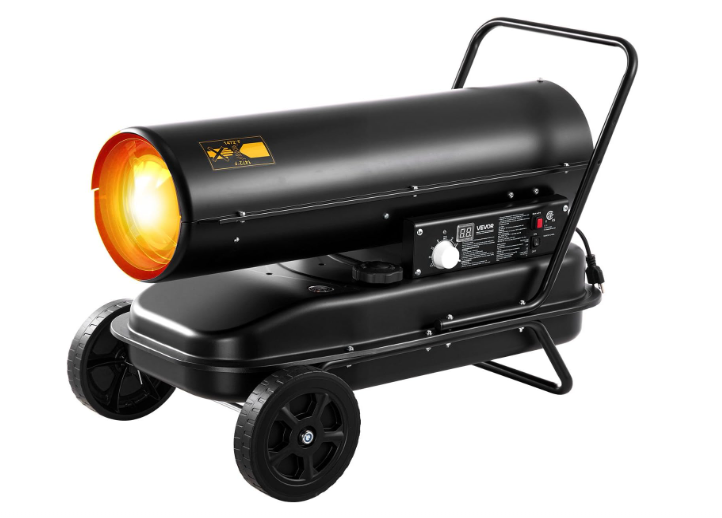
VEVOR 125,000 BTU Forced Air Kerosene/Diesel Torpedo Heater for Large Spaces
Best Torpedo Heater option designed for demanding environments, this VEVOR model delivers 125,000 BTU of forced-air heat using kerosene or diesel fuel, as stated on the product page. The blower-type design supports fast heat distribution, making it suitable for jobsites, garages, warehouses, workshops, construction areas, and outdoor heating. Integrated wheels improve portability, while the adjustable temperature control allows regulated heat output based on conditions.
Built as a portable torpedo space heater, it focuses on mobility and practical operation in work-focused settings. The solid metal housing and forced-air system are intended for open, ventilated areas where high-output heating is required.
User feedback:
User feedback often mentions strong heat output and easy movement due to the wheel-equipped design.
Standout feature:
Dual-fuel compatibility for kerosene and diesel operation.
Key benefits:
- High BTU heat output
- Adjustable temperature control
- Wheeled portable design
- Blower-type forced air
Compatible with:
- Garages
- Warehouses
- Construction sites
- Outdoor work areas
Special note:
User feedback notes this heater is intended for well-ventilated, non-residential environments only.
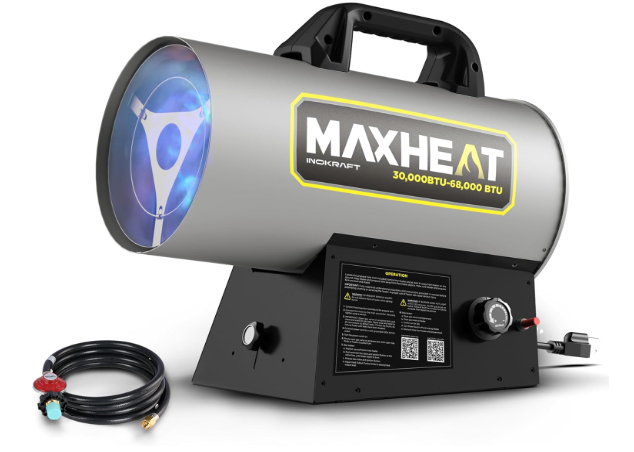
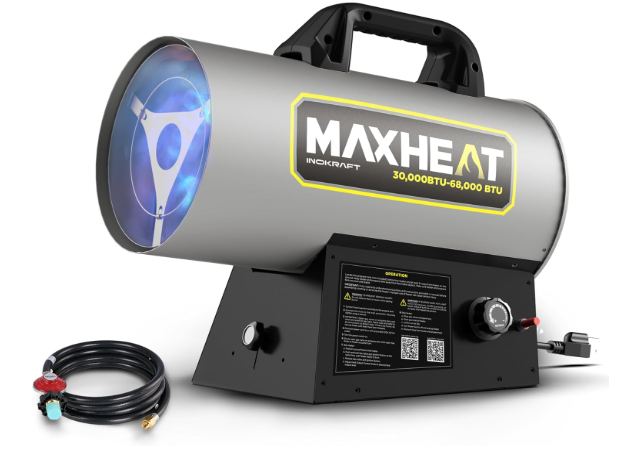
InoKraft MaXheat MH68 68,000 BTU Propane Forced Air Torpedo Heater
This electric torpedo heater alternative powered by propane, offers 68,000 BTU of forced-air heat in a compact, portable format. The InoKraft MaXheat MH68 is listed as suitable for garages, shops, jobsites, and construction locations. It operates with liquid propane and includes a 10-foot hose witha regulator, allowing flexible placement away from the fuel source.
The heater features adjustable heat output, supporting controlled operation based on space size. Its torpedo-style forced-air system is designed for quick heat circulation in open work areas without a complex setup.
User feedback:
User feedback frequently highlights convenient setup with the included hose and steady heat output.
Standout feature:
Included 10-foot hose and regulator for propane connection.
Key benefits:
- Adjustable propane heat
- Compact portable body
- Forced air circulation
- Included hose regulator
Compatible with:
- Garages
- Workshops
- Jobsites
- Construction areas
Special note:
User feedback indicates this propane heater requires proper ventilation during operation.
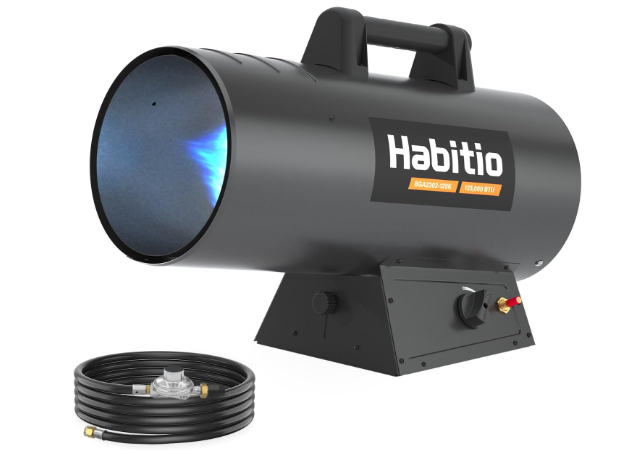
Habitio 125,000 BTU Forced Air Propane Torpedo Heater, CSA Certified
Among best rated torpedo heater options, this Habitio model provides 125,000 BTU of forced-air heat using propane fuel. The listing confirms inclusion of a 10-foot hose with regulator and CSA certification, supporting use in jobsites, garages, and construction sites. Its torpedo-style airflow design focuses on efficient heat distribution across larger open spaces.
The portable construction allows repositioning as needed, while the certification emphasizes compliance with recognized safety standards. This model is positioned for users needing high-output propane heating without permanent installation.
User feedback:
User feedback often notes consistent heating performance and appreciates CSA certification.
Standout feature:
CSA-certified design with high BTU output.
Key benefits:
- 125,000 BTU heating
- CSA certified build
- Forced air design
- Hose included
Compatible with:
- Garages
- Jobsites
- Construction sites
- Open workspaces
Special note:
User feedback confirms use is intended for ventilated, non-living spaces.
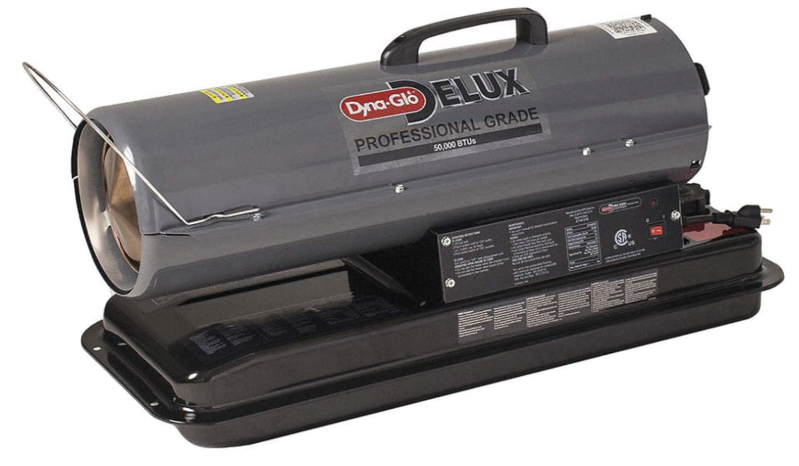
Dyna-Glo KFA50DGD 50,000 BTU Kerosene Forced Air Torpedo Heater
This Best Kerosene Torpedo Heater contender delivers 50,000 BTU of forced-air heat, making it suitable for smaller garages, workshops, and jobsite areas compared to higher-output models. The Dyna-Glo KFA50DGD operates on kerosene fuel and uses a compact torpedo-style design for directed airflow.
Its reduced BTU rating allows more controlled heating in limited spaces while maintaining the forced-air efficiency associated with torpedo heaters. The unit is designed for portable use where moderate heat output is sufficient.
User feedback:
User feedback frequently mentions dependable operation for smaller work areas.
Standout feature:
Moderate 50,000 BTU output for controlled heating.
Key benefits:
- Compact kerosene heater
- Forced air output
- Portable design
- Moderate BTU rating
Compatible with:
- Small garages
- Workshops
- Jobsite areas
- Utility spaces
Special note:
User feedback indicates kerosene use requires adequate ventilation.
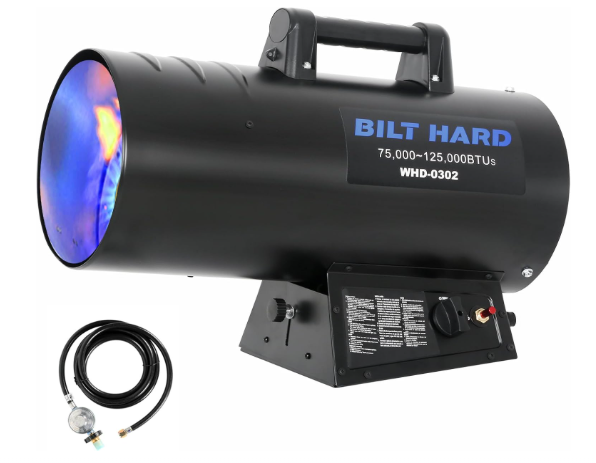
BILT HARD 125,000 BTU Propane Forced Air Torpedo Heater, CSA Listed
Positioned among Best Propane Torpedo Heater choices, this BILT HARD model produces 125,000 BTU of forced-air heat for garages and jobsites. The heater features adjustable output, allowing users to tailor heat levels to space requirements. It is CSA listed, reflecting adherence to established safety standards.
Its torpedo-style airflow supports fast heat distribution in open environments. The portable design enables relocation across work areas where temporary, high-capacity heating is needed.
User feedback:
User feedback often highlights strong heat output and adjustable control.
Standout feature:
CSA-listed propane heater with adjustable output.
Key benefits:
- High BTU propane heat
- Adjustable output control
- Forced air circulation
- CSA-listed design
Compatible with:
- Garages
- Jobsites
- Workshops
- Construction areas
Special note:
User feedback emphasizes operation only in ventilated, non-residential spaces.
Torpedo Heater Benefits and Working
A torpedo heater is a portable heating device that is commonly used to heat outdoor spaces or large indoor areas such as garages, workshops, and construction sites. This type of heater uses kerosene, diesel, or propane as fuel to produce heat through forced-air convection. The heat generated by a torpedo heater is powerful and can quickly warm up even the coldest spaces.
These heaters are designed to be easily moved from one location to another, allowing you to use them wherever you need them. They are also relatively easy to set up and use, making them ideal for people who are not particularly handy or experienced with heaters.
These heaters are designed to heat large areas quickly and effectively, which means that you can get a lot of heat for your money. They are also relatively fuel-efficient, which means that they won’t cost you a fortune to operate.
This is where the fuel is burned to produce heat, which is then blown out into the surrounding space. The combustion chamber is carefully designed to ensure that the fuel is burned efficiently and that the heat produced is distributed evenly.
Buying Guide for the Best Torpedo Heater
If you’re looking for a torpedo heater, you’re probably aware of the numerous benefits it provides, including efficient heating in outdoor and poorly ventilated spaces. With so many models available, choosing the best one can be a daunting task.
Fuel Type
Torpedo heaters can run on kerosene, diesel, propane, or natural gas. The type of fuel you choose will affect the heater’s performance and maintenance requirements. Diesel and kerosene heaters are excellent for outdoor and construction sites due to their portability, while propane and natural gas heaters are ideal for indoor use.
Heating Capacity
Torpedo heaters are available in various heating capacities, measured in BTUs (British Thermal Units). Choose a heater that can efficiently heat the space you intend to use it in. For instance, a heater with a capacity of 175,000 BTUs is ideal for large spaces, while a 50,000 BTU heater is sufficient for smaller spaces.
Portability
Portability is a crucial factor to consider, especially if you need to move the heater from one job site to another. A heater with wheels and carrying handles makes it easier to transport.
Safety Features
Safety should always be a top priority when choosing a torpedo heater. Look for heaters with built-in safety features, such as automatic shut-off mechanisms that activate when the heater overheats or tips over.
Durability and Construction
Durability and construction are critical factors, especially if you intend to use the heater frequently. Choose a heater with a sturdy frame and made from high-quality materials that can withstand wear and tear.
Brand and Price
Consider the brand and price of the heater. While it’s tempting to go for the cheapest option, it’s essential to invest in a high-quality heater from a reputable brand to ensure longevity and efficient heating.
Using a Torpedo Heater in Outdoor and Poorly Ventilated Spaces
Torpedo heaters are a popular choice for outdoor and poorly ventilated spaces such as construction sites, warehouses, and garages. These heaters are designed to provide powerful and reliable heat, even in the harshest conditions.
Torpedo heaters are designed to produce a large amount of heat quickly and efficiently, making them ideal for heating large areas. They can also run on a variety of fuels, including kerosene, diesel, and propane, which makes them versatile and adaptable to different situations.
Using a torpedo heater in outdoor and poorly ventilated spaces can also be dangerous if proper safety measures are not taken. These heaters produce high levels of carbon monoxide, which is a toxic gas that can cause serious health problems, including death.
It is essential to ensure that the space being heated is well-ventilated and that the heater is placed in a safe location away from flammable materials and objects.
If you plan to use a torpedo heater in an outdoor or poorly ventilated space, it is important to take safety seriously. Make sure to read the manufacturer’s instructions carefully and follow them closely. It is also a good idea to invest in a carbon monoxide detector, which will alert you if dangerous levels of gas are present.
Maintenance and Service Requirements for Torpedo Heaters
Torpedo heaters are a popular choice for heating large spaces quickly and efficiently, but like any heating equipment, they require regular maintenance and servicing to ensure they continue to operate safely and effectively.
Cleaning: Regular cleaning is essential to keep the heater functioning properly. Dust and debris can accumulate in the heater’s internal components, leading to reduced efficiency and potential safety hazards.
Fuel quality: The quality of the fuel used in the heater can have a significant impact on its performance and lifespan. Always use high-quality kerosene or diesel fuel that is free of contaminants and water. Contaminated fuel can cause clogs in the heater’s fuel system, which can lead to reduced efficiency and potential safety hazards.
Filter replacement: The heater’s air filter should be checked and replaced regularly, as a clogged filter can reduce the efficiency of the heater and cause it to overheat. Refer to the manufacturer’s instructions for guidance on when and how to replace the air filter.
Igniter maintenance: The heater’s igniter should be inspected and cleaned regularly to ensure it is functioning properly. A faulty igniter can prevent the heater from starting or cause it to shut off unexpectedly.
Professional servicing: It is important to have a professional technician inspect and service the heater at least once a year. A professional can identify potential safety hazards and perform any necessary repairs or maintenance to keep the heater operating safely and efficiently.
Common Uses of Torpedo Heaters in Various Environments
Construction Sites
Torpedo heaters are frequently used on construction sites during colder months. They can provide heat for workers and help dry out materials such as paint and drywall mud.
Warehouses
Large warehouses can be difficult to heat with traditional heating systems. Torpedo heaters can quickly and efficiently heat these spaces, making them more comfortable for workers.
Outdoor Events
Torpedo heaters are often used at outdoor events such as weddings, concerts, and festivals. They can provide heat for attendees and keep them comfortable in colder temperatures.
Garages and Workshops
Torpedo heaters are a popular choice for heating garages and workshops. They can quickly warm up these spaces and make them more comfortable for working in.
Agricultural Settings
Farmers often use torpedo heaters in barns and other agricultural settings to keep livestock and plants warm during colder months.
Advantages and Disadvantages of Portable vs. Fixed Torpedo Heaters
Torpedo heaters come in two basic types: portable and fixed. Each type has its advantages and disadvantages, and the choice between them will depend on your specific needs and circumstances.
1. Advantages of Portable Torpedo Heaters:
- Portable torpedo heaters are designed to be easily moved from one location to another, which makes them ideal for temporary heating needs.
- They are lightweight and easy to transport, so you can take them with you wherever you go.
- Portable torpedo heaters are typically less expensive than fixed heaters, making them an affordable option for those on a budget.
- They are easy to store when not in use, and they take up minimal space.
2. Disadvantages of Portable Torpedo Heaters:
- Portable torpedo heaters are not suitable for large or permanent heating needs, as they are not designed for continuous use.
- They require a constant supply of fuel, which can be inconvenient and expensive over time.
- Portable heaters may not be as powerful as fixed heaters, which means they may not be able to heat large spaces or provide as much heat as a fixed heater.
3. Advantages of Fixed Torpedo Heaters:
- Fixed torpedo heaters are designed for permanent heating needs, and they can provide a continuous source of heat without the need for refueling.
- They are typically more powerful than portable heaters, making them suitable for heating large spaces.
- Fixed torpedo heaters are often more efficient than portable heaters, which means they can save you money on your energy bills over time.
4. Disadvantages of Fixed Torpedo Heaters:
- Fixed torpedo heaters are typically more expensive than portable heaters, making them a less affordable option for those on a budget.
- They are not portable, which means they cannot be moved from one location to another.
Types of the Best Torpedo Heaters
Kerosene torpedo heaters: These are the most common type of torpedo heaters and are powered by kerosene fuel. They are easy to operate, cost-effective, and provide efficient heating for large spaces.
Propane torpedo heaters: These heaters use propane as a fuel source and are ideal for outdoor use. They are portable, easy to use, and emit fewer fumes compared to kerosene heaters.
Natural gas torpedo heaters: These heaters are powered by natural gas and are often used in industrial or commercial settings. They are a good option for those who have access to natural gas lines and need to heat large spaces.
Diesel torpedo heaters: These heaters use diesel fuel and are ideal for use in areas where kerosene is not available. They are powerful and efficient, but may be louder and emit more fumes than other types of torpedo heaters.
Electric torpedo heaters: These heaters are powered by electricity and are suitable for small to medium-sized spaces. They are clean and easy to use but may be less powerful than other types of torpedo heaters.
Safety Precautions for Torpedo Heaters and Risk Minimization
Torpedo heaters are a convenient and effective way to heat large, open spaces quickly. However, like any heating appliance, they come with certain risks, including fire, carbon monoxide poisoning, and burns. To ensure safe operation and minimize these risks, it is important to take proper safety precautions when using a torpedo heater.
First and foremost, it is essential to read and follow the manufacturer’s instructions and warnings carefully. This includes information on proper fuel type and handling, ventilation requirements, and safe operation. It is also important to maintain and service the heater regularly, including cleaning or replacing air filters, checking fuel lines for leaks, and inspecting electrical connections.
When using a torpedo heater, it is crucial to ensure proper ventilation to prevent the buildup of carbon monoxide. This means using the heater in a well-ventilated area or providing adequate ventilation if used in a more enclosed space. It is also important to keep flammable materials at a safe distance from the heater and to never leave the heater unattended.
To minimize the risk of burns or other injuries, it is important to use the heater in a stable and level position, away from foot traffic or other hazards. Never touch the heater while it is in operation, and allow it to cool down completely before moving or storing it.
Troubleshooting Common Issues and Repair Needs for Torpedo Heaters
Torpedo heaters are a popular heating option for construction sites, garages, workshops, and other industrial settings. While they are generally reliable, like any mechanical device, they can develop problems over time. Understanding common issues and repair needs for torpedo heaters can help you troubleshoot and fix problems when they arise.
One common issue with torpedo heaters is failure to start or difficulty starting. This can be caused by several factors, such as a clogged fuel filter, a faulty spark plug, or a low fuel level. Checking and cleaning the fuel filter, replacing the spark plug, and refilling the fuel tank can often resolve these issues.
Another common issue is poor performance or low heat output. This can be caused by a malfunctioning fan motor or dirty fuel nozzle. Cleaning the nozzle and replacing the fan motor can often resolve these issues.
Regular maintenance is important to keep your torpedo heater working properly. This includes cleaning or replacing the air filter, checking and adjusting the fuel pressure, and inspecting the fuel lines and fittings for leaks.
It is also important to follow the manufacturer’s recommended maintenance schedule and to use the correct type of fuel for your heater.
If you are not comfortable performing maintenance or repairs on your torpedo heater, it is best to have it serviced by a qualified professional. Attempting to repair a torpedo heater without the proper training and tools can be dangerous and may cause further damage to the unit.
FAQs
What is a torpedo heater?
A torpedo heater is a portable heater that is commonly used to heat outdoor or poorly ventilated spaces.
How does a torpedo heater work?
A torpedo heater works by using either kerosene, diesel fuel, or propane to create heat. The fuel is ignited, and the heater blows the hot air into the desired space using a fan.
Can I use a torpedo heater indoors?
Torpedo heaters are not recommended for use indoors due to the potential for carbon monoxide buildup. However, some models are designed for use in well-ventilated indoor spaces.
How do I choose the right size torpedo heater for my needs?
To determine the right size torpedo heater for your needs, you should consider the size of the space you want to heat, the fuel source you have available, and the temperature range you need to achieve.
Are torpedo heaters safe to use?
When used properly and according to manufacturer instructions, torpedo heaters can be safe to use. However, it is important to take proper safety precautions and to never leave the heater unattended.
How do I maintain my torpedo heater?
Regular maintenance of your torpedo heater includes cleaning or replacing the air filter, checking the fuel lines for leaks, and inspecting the spark plug. Consult your manufacturer’s instructions for specific maintenance requirements.
Can I use a torpedo heater to dry paint or other materials?
Torpedo heaters can be used to help dry paint or other materials, but caution should be exercised as overheating can lead to fire hazards. Always follow manufacturer instructions and recommended usage guidelines.